03 9070 0955 03 9070 0955

Freedom from glasses starts here.

Freedom from glasses starts here.

Refractive lens exchange

Freedom from glasses starts here.

See clearly at every distance. From reading to driving, enjoy seamless vision all day with our premium lens replacement.

Refractive lens exchange

Refractive lens exchange (RLE) is a vision correction surgery where your eye’s natural lens is removed and replaced with a clear intraocular lens (IOL). The procedure is very similar to cataract surgery, but is done primarily to correct vision rather than treat cataracts.

How RLE works What is refractive lens exchange

RLE is designed to change the focusing power of the eye by replacing the natural lens with an artificial lens implant. The goal is to improve unaided vision for the tasks that matter most to you, whether that is driving, screen work, reading, or a mix of all three.

How RLE works

RLE uses a similar surgical approach to cataract surgery. A micro-incision is made, the natural lens is broken up and removed, and an intraocular lens is implanted in its place. In RLE, the lens being removed is usually clear or only mildly changed, and the main reason for surgery is to correct vision rather than remove a significantly cloudy lens.

What vision problems RLE can correct

RLE may be used to correct:

  • Long-sightedness (hyperopia)
  • Short-sightedness (myopia), with careful retinal risk assessment
  • Astigmatism
  • Presbyopia, using multifocal or EDOF lenses where appropriate

If your main frustration is age-related near blur, it helps to understand what presbyopia is and why lens-based solutions can be considered once it starts affecting daily tasks.

Group 1707484469 (4)

What is the difference between refractive lens exchange and cataract surgery

The core procedure is the same, but the main reason differs. Cataract surgery is performed when the natural lens is cloudy and affecting vision. RLE is performed primarily to reduce dependence on glasses and contact lenses, often before a visually significant cataract develops.

Who is a good candidate for a refractive lens exchange

Refractive lens exchange is often recommended for people over the age of 45 with age-related loss of near vision (presbyopia), short-sightedness (myopia), long-sightedness (hyperopia) or astigmatism who want freedom from glasses.
People who already have early cataracts may benefit because RLE removes the lens that eventually becomes a cataract anyway. Because the natural lens is replaced, cataracts cannot develop later, which is a long-term advantage.
At your consultation, the health of your eyes will be fully assessed, and a recommendation will be made, tailored to your specific needs and personal preferences.

Common reasons people choose RLE

People often consider refractive lens exchange if they:

  • Want to reduce reliance on reading glasses, or feel they are constantly switching between pairs
  • Are not ideal candidates for laser eye surgery due to age, dry eye profile, corneal factors, or prescription range
  • Have higher hyperopia, early lens changes, or strong presbyopia symptoms that are hard to manage with other options

RLE is typically considered for people in the presbyopia age range and beyond, but suitability is always individual. In many patients, the discussion centres on how to balance distance, intermediate, and near needs, and how comfortable you are with the trade-offs of different lens types.

What are the benefits of RLE

  • It is a permanent correction
  • It can correct distance, intermediate and near vision depending on type of lens chosen
  • It prevents future cataract formation because the natural lens has been removed
  • It can correct multiple vision problems at once e.g. myopia, astigmatism and presbyopia
  • It can correct high prescriptions that are not suitable for laser procedures

Intraocular lens options for RLE

Lens choice drives the outcome. The best lens for you depends on what you want to do without glasses, and what visual trade-offs you are willing to accept.

Monofocal IOLs

Monofocal lenses provide clear vision at one main distance, usually distance. You may still need reading glasses for near tasks, and some people choose a blended vision strategy to reduce dependence on reading glasses. Monofocal lenses can be an excellent option for patients who prioritise crisp distance vision and night driving clarity.

Multifocal IOLs

Multifocal lenses aim to reduce reliance on glasses by providing more than one focus point. They can be effective for both distance and near tasks, but they are not suitable for everyone. These lenses cause halos or glare at night, and lens selection depends heavily on eye health, pupil behaviour, and visual priorities.
Eye exam15

Extended depth of focus (EDOF) IOLs

EDOF lenses aim to provide a broader range of vision, particularly distance and intermediate, with different trade-offs compared with multifocal lenses. Suitability depends on your eye health and the type of vision you need most. If you are comparing lens designs, our page on multifocal EDOF lenses explains how these options can differ in real-world performance.

Choosing the right lens for your lifestyle

Lens counselling focuses on your daily tasks and your tolerance for visual side effects. We discuss:

  • Reading needs, screen time, and how often you do close work
  • Night driving and low-light conditions
  • Hobbies and work demands, including precision tasks
  • Your tolerance for halos, glare, or a small compromise in one distance range to gain better function at another

What happens during refractive lens exchange surgery

Refractive lens exchange (RLE) is generally performed as day surgery, with a structured process before, during, and after the procedure.

Step-by-step overview

A small incision is made at the edge of the cornea. The natural lens is broken up and removed, and an intraocular lens is implanted into the capsular bag, which helps hold the lens in position. The incision is usually self-sealing.

Anaesthetic and comfort

RLE is commonly performed under local anaesthetic with sedation. The aim is comfort and calm, while still allowing safe cooperation during the procedure.

How long RLE takes

The procedure time per eye is typically short, but your total time at the hospital is longer due to pre-op preparation and post-op checks. RLE is often done one eye at a time to allow healing and to fine-tune planning for the second eye.

Pre-operative assessment for refractive lens exchange

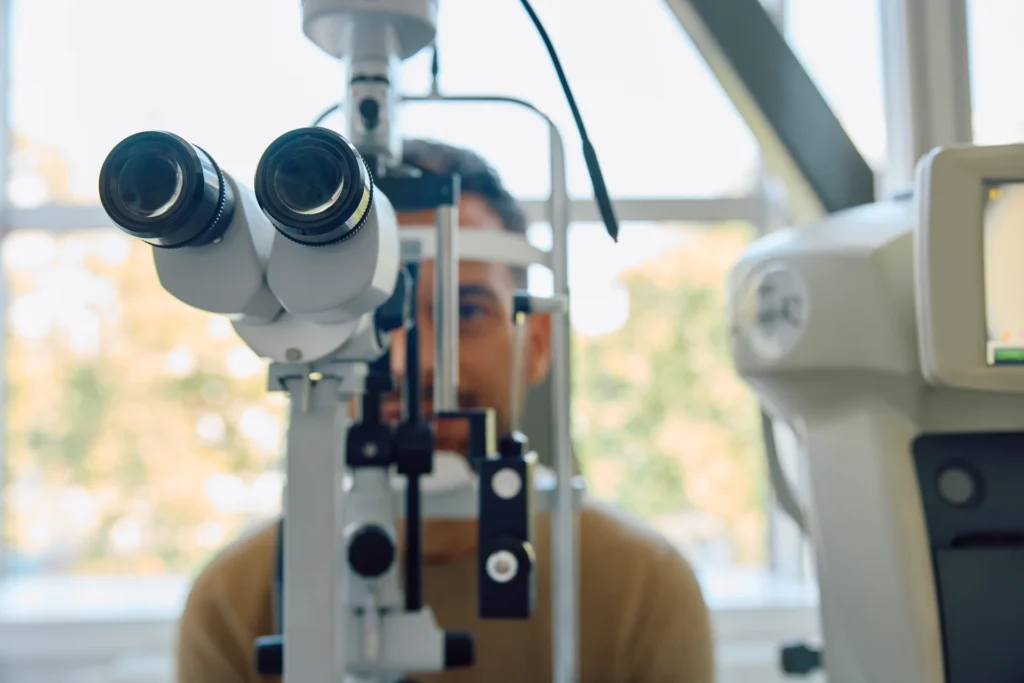
Refractive lens exchange planning is measurement-driven. The goal is to choose the right lens design and power, and confirm that the eye is healthy enough to proceed safely.
Measurements for lens selection

Pre-operative testing typically includes biometry to calculate IOL power, corneal curvature and astigmatism mapping, and assessment of ocular dominance. These measurements help predict outcomes and reduce the chance of a refractive surprise.

Eye health checks

Your assessment includes checks of overall eye health such as retina examination and macular OCT, eye pressure assessment, and screening for dry eye. These checks help

Discussing visual priorities and trade-offs

This is where the plan becomes personal. We talk through your “must-have” tasks, the kind of vision you value most, and how you feel about potential halos or glare. Clear goal-setting upfront makes outcomes more predictable and satisfaction higher.

Recovery after refractive lens exchange

Recovery is usually steady, but vision can fluctuate early on, especially with multifocal or EDOF lens designs as your brain adapts to the new optical system.

The first week

In the first week, it is common to experience mild irritation, dryness, light sensitivity, or glare, and some day-to-day fluctuation in clarity. You will be given a drop routine to reduce infection risk and control inflammation, and you will be advised to avoid eye rubbing.

When you can drive, work and exercise

Returning to driving depends on vision and safety checks. Many people can return to desk work relatively soon, but physical work, heavy lifting, swimming, and dusty environments may need a longer break. Your advice will be based on how your eye is healing and what you do for work.

Follow-up appointments

Follow-up visits monitor healing, eye pressure, lens position, and the refractive outcome. These reviews also provide a checkpoint to address dryness, glare symptoms, or any concerns early.

Results you can expect from refractive lens exchange

Outcomes depend on your starting prescription, the lens design chosen, and your eye health.

Range of vision outcomes (based on lens choice)

Monofocal lenses usually aim for crisp distance vision, with reading glasses often still needed. Multifocal and EDOF designs aim to reduce glasses dependence across more distances, but they may bring trade-offs like halos or reduced contrast in certain conditions. The lens plan is selected to match your priorities and tolerance.

Will I still need glasses

Some people may still need glasses for specific tasks such as very fine print, prolonged screen use, or night driving, even after a successful outcome. The aim is reduced dependence, not a promise of never needing glasses again.

Long-term benefits

Because the natural lens is replaced, a cataract cannot develop in that treated lens in the future. You still need ongoing eye care for other age-related changes that can affect vision over time.

Why choose City Eye Surgeons for refractive lens exchange

RLE outcomes depend on planning and follow-up as much as the procedure itself.

Detailed lens counselling and planning

We focus on matching lens choice to your real-world needs, not just your prescription. That includes night driving, screen work, reading habits, and your tolerance for halos or glare.

Advanced measurements for accurate outcomes

Accurate biometry and corneal measurements support accurate lens power selection and reduce surprises. Extra care is taken when eyes have prior refractive history or more complex measurements.

Structured Aftercare and Long-Term Support

Follow-up visits are planned to monitor healing, manage dryness or inflammation, and confirm visual outcomes. Long-term support also matters because vision can change with age, even after successful surgery.

FAQs

What is refractive lens exchange and how is it different from cataract surgery?

The surgical steps are very similar. Cataract surgery is done to remove a cloudy lens that is affecting vision. RLE is done primarily to correct vision and reduce dependence on glasses, usually before a cataract becomes visually significant.

It can be, particularly when presbyopia is combined with higher long-sightedness or when other options are less suitable. The best option depends on your eye health, your visual goals, and how you feel about the trade-offs of different lens designs.

Lens options can include monofocal, EDOF and multifocal designs. The right choice depends on your prescription, eye health, and whether you value night driving clarity, reading without glasses, or a balance of both.

They can occur, especially with multifocal and EDOF lenses, and are often most noticeable at night. Suitability screening and lens selection help reduce the chance of bothersome symptoms.

Many people notice clearer vision early, but stabilisation can take weeks. The timeline depends on healing, dryness, and the lens design chosen, especially if your vision needs to adapt across multiple distances.

Rediscover clearer vision